


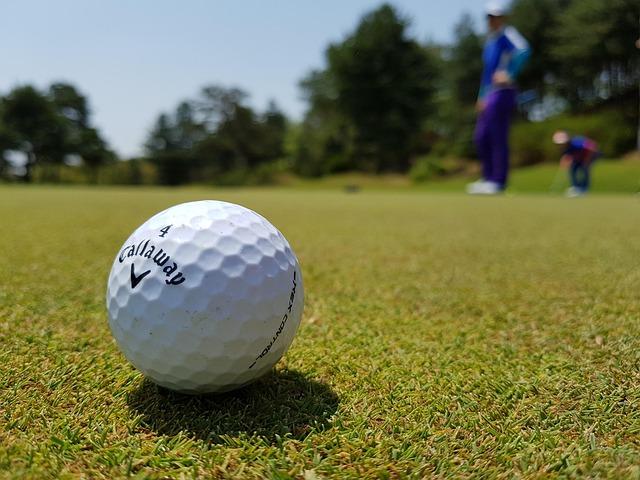
In the quest for longer drives and better accuracy, golfers often face a common question: what golf ball compression is right for their swing? Conventional wisdom suggests that slower swing speeds benefit from softer, lower-compression balls, while faster swingers should opt for harder ones. However, new data gathered from robotic testing challenges this long-held belief, revealing that slow swing speeds do not necessarily demand soft compression golf balls. This analysis sheds fresh light on how compression truly affects ball performance, offering players a more nuanced understanding to refine their equipment choices.
Golf Ball Compression and Swing Speed Explored with Robot Data
Recent robot testing reveals that the commonly held belief-*that slower swing speeds require softer golf balls*-does not always hold true. Instead, compression ratings, representing the ball’s deformation under impact, show a surprisingly complex relationship with swing velocity. Robots swinging at different speeds demonstrated that balls with mid to higher compression ranges can outperform lower compression balls, even at swing speeds below 85 mph. This challenges the assumption that soft balls automatically generate better distance and feel for players with slower swings.
Data indicates that selecting a golf ball should be more nuanced, taking into account factors beyond swing speed alone. Key findings from the robot data include:
- Mid-compression balls (~70-80) often offer better launch conditions and carry for moderate swing speeds.
- Soft compression balls (<70) may lose distance due to excessive deformation and energy loss.
- Compression alone doesn’t define performance; cover material and construction play vital roles.
| Swing Speed (mph) | Optimal Compression Range | Performance Notes |
|---|---|---|
| 60-75 | 65-75 | Good balance of spin and distance |
| 76-85 | 70-80 | Improved energy transfer and trajectory |
| 86+ | 80+ | Maximized control and speed |
Why Slow Swing Speeds Require More Than Just Soft Golf Balls
Golfers with slower swing speeds often assume that the solution lies solely in selecting softer golf balls, but robotic testing reveals a more nuanced reality. While softer balls do compress more easily at impact, they don’t always translate to better distance or control for players swinging slower than 85 mph. Instead, factors such as ball construction, core design, and spin rates play crucial roles in optimizing performance. Soft balls might reduce spin excessively, leading to less stopping power on approach shots, or fail to transfer energy efficiently, resulting in distance loss.
Studies leveraging golf launch monitors and robotic swing simulators highlight that moderate compression ratings paired with specific dimple patterns can outperform ultra-soft balls in various performance metrics. Consider the following insights derived from these experiments:
- Medium compression balls provide a balance between distance and feel, especially for swings under 85 mph.
- Spin consistency is equally crucial for controlling trajectory and stopping ability on greens.
- Ball durability and wind resistance often improve with slightly firmer constructions, benefiting slower swingers.
| Ball Compression | Avg. Swing Speed (mph) | Distance Gain (%) | Spin Rate (rpm) |
|---|---|---|---|
| Soft (70-80) | 75-85 | +2% | 6500 |
| Medium (80-90) | 75-85 | +5% | 5800 |
| Firm (90+) | 75-85 | -3% | 7200 |
To Conclude
In conclusion, the latest robotic data challenges long-held assumptions about golf ball compression, revealing that slower swing speeds do not necessarily require softer balls. This insight invites players to reconsider their equipment choices based on objective performance metrics rather than conventional wisdom. As technology continues to advance, golfers are better equipped than ever to select golf balls that truly enhance their game, regardless of swing speed. Staying informed about such developments will be key for players seeking to optimize their performance on the course.